
Views: 0 Author: Site Editor Publish Time: 2026-11-16 Origin: Site
MOQ is arithmetic, not a negotiating posture. Five fixed costs — changeover, material minimums, test capacity, certification, packaging — divided by unit volume produce the number.
Changeover is usually the biggest lever. SMT re-loading, fixture swaps, first-article checks and burn-in rewiring consume capacity regardless of order size.
The hardest floor sits upstream. Transformers, heatsinks, connectors and cartons carry their own supplier minimums a factory cannot wish away.
Lower MOQ is not automatically better. Fragmented orders mean higher unit prices, more changeovers and weaker batch-to-batch consistency.
MOQ and price breaks answer different questions. One is set by fixed costs, the other by volume pricing — negotiate them separately.
A factory's minimum order quantity for amplifiers is not a number invented at the negotiation table. It is what falls out of a simple division: the fixed costs of switching a line to your product — changeover hours, upstream material minimums, test-station setup, certification samples, printed packaging — spread across the units you are willing to buy. In the audio industry these quantities typically land somewhere in the low hundreds to around a thousand units; below that range, nothing disappears, the same fixed costs are simply divided across fewer pieces. This article walks through each of the five cost drivers, shows the arithmetic with an illustrative table, explains why chasing the lowest possible MOQ often backfires, and lists six legitimate ways buyers and factories lower the number together.
The most common first reaction to "MOQ: 300 units" is suspicion — the supplier must be inflating the number to protect margin. A trading intermediary sometimes does exactly that. But a factory building amplifiers on its own line faces different arithmetic: everything that happens when the line switches to your order costs the same whether you buy 50 units or 500. Material suppliers enforce their own minimums regardless of your forecast, and test stations get tied up for the same hours either way. MOQ is simply the volume where fixed cost per unit stops being absurd.
This reframing changes the conversation. Instead of "can you accept 100 pieces for the same price," the productive question is "which of these fixed costs can we actually eliminate or share?" The rest of this article maps them, each with a way to verify the factory's response.
Changeover is the largest and least visible component. Switching a line from the previous order to yours touches more stations than most buyers expect:
Changeover step | What actually happens | Typical magnitude |
|---|---|---|
SMT line re-loading | Feeder assignment rewritten, reels loaded, feeder verification, first-article AOI confirmation | Hours |
Assembly line re-setup | Work instructions revised, locating fixtures swapped, operators re-briefed | Hours |
Final assembly fixtures | Silkscreen alignment plates, torque tooling, assembly sequence changeover | Hours |
Test station configuration | PCBA test programs switched, burn-in load racks rewired, per-channel checklists loaded | Hours |
First-article inspection (FAI) | One unit measured across all parameters, archived and signed off before release | One unit, but the full process runs end to end |
Notice the last two rows: test-station setup and first-article inspection cost the same whether the order is one unit or one thousand. During changeover the line produces nothing sellable while labor, equipment and floor space keep burning, and that cost has nowhere to go except into the per-unit price.
There is a second, quieter time cost: ramp-up. The first dozens of units after any changeover run below steady-state efficiency and yield. Producing 10,000 units a year as ten orders of 1,000 is a materially different machine than as forty orders of 250. Mature factories would rather quote a "slightly high but honest" MOQ than a flattering number the floor cannot make work.
A useful verification question: "Walk me through what happens between line stop and first shippable unit — which stations, how long each?" A factory that manages its own production answers station by station; vague answers usually mean the speaker is far from the line.

Figure 1 — A typical multichannel amplifier, the unit every changeover station is reconfigured for (typical construction).
A factory imposes an MOQ on its customers while simultaneously accepting MOQs from its own suppliers. For amplifiers, several core materials carry rigid upstream minimums:
Material | Typical upstream minimum | Effect on MOQ |
|---|---|---|
Toroidal transformers | Winding houses schedule by batch per power rating | Custom specs usually produced in hundred-unit batches |
Heatsink extrusions | Stock profiles sold per length; new dies are a separate tooling decision | Stock profiles stay flexible; custom profiles raise the floor |
Electrolytic capacitors / power devices | Distributors sell by reel or box | High per-unit consumption; small orders may not use one reel |
RCA / XLR / speaker terminals | Often tens of thousands of pieces per order | A smaller constraint, but a real one |
Sheet-steel chassis | Generic bending fixtures; powder coating runs by batch | Rises when color or structure changes |
Front panels | CNC per part, no minimum; anodizing batched per run | Small batches pay a visible premium |
The takeaway from this table: the MOQ floor often sits above the factory, not inside it. When you push on MOQ, what you are really negotiating is whether the factory will finance the material gap itself. A factory that agrees is carrying inventory risk on your behalf, and that resurfaces in the unit price.
Finished amplifiers normally pass through full functional testing and burn-in before shipment. This driver rarely shows up in negotiations because it appears as time rather than money:
Item | What it means | The feel of the numbers |
|---|---|---|
Burn-in rack slots | One multichannel amplifier occupies one slot; units cannot move mid-run | Slots are finite shared capacity |
Burn-in duration per unit | Industry practice ranges from several hours to beyond 24 hours depending on quality positioning | Duration × slots = daily throughput ceiling |
Per-channel testing | Rated power, distortion, signal-to-noise and protection circuits checked channel by channel | More channels, proportionally more bench time |
Data archiving | Measured results stored per serial number for traceability | Labor and system cost incurred per unit |
An illustrative calculation (order-of-magnitude only, no factory's actual figures): with 12-hour burn-in and 40 rack slots, a line finishes roughly 80 units per day, so a 500-unit order occupies the burn-in room for six days or more. Small orders slice that shared capacity into ever-finer pieces, and utilization drops with every slice.
Multichannel products deserve their own note: bench time grows roughly linearly with channel count. A seven-channel amplifier carries several times the per-channel checks of a stereo unit, plus independent burn-in wiring per channel. For multichannel models, isolate this line item when discussing MOQ — often the heaviest row in the cost sheet.
The verification question: "What exactly is tested on every unit before shipment, how long does burn-in run, and is the data archived?" A real test operation answers with specific items and hours; if burn-in is only a marketing word, this question exposes it quickly.
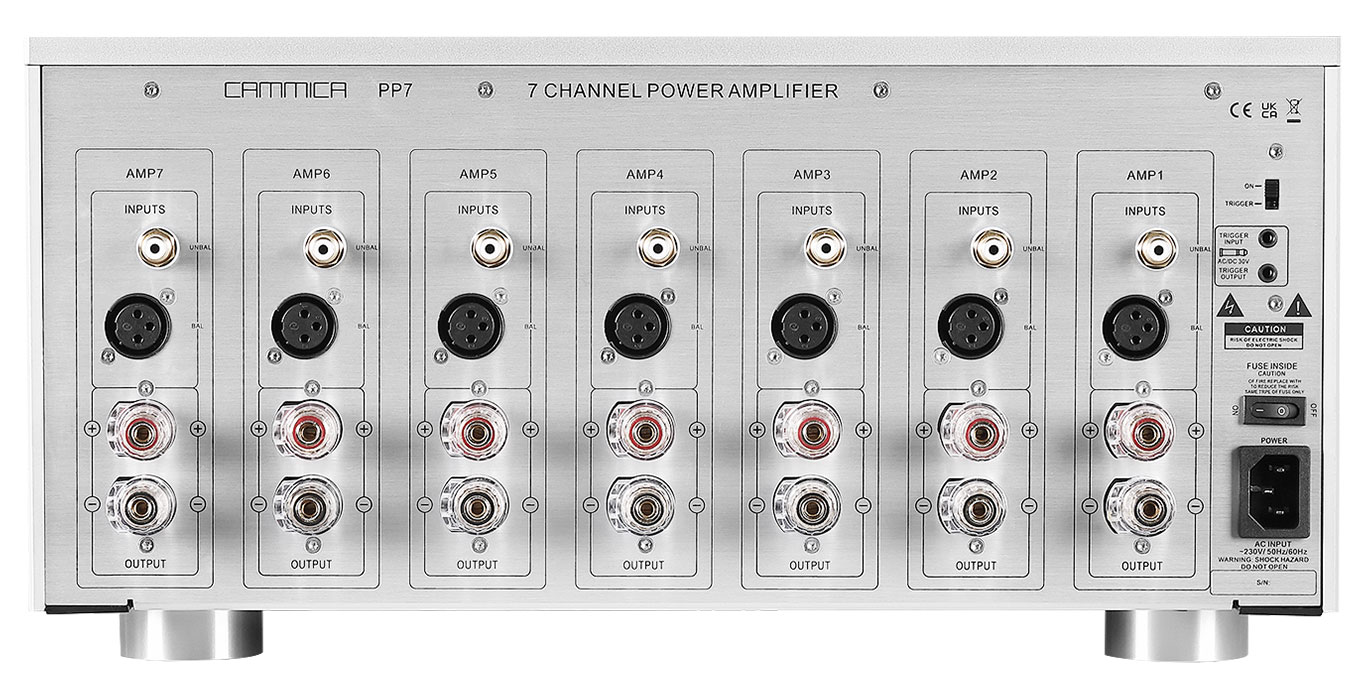
Figure 2 — Per-channel connectors on a typical amplifier rear panel: each channel adds bench time (typical construction).
Export orders carry compliance costs that are fixed per model, not per unit:
Item | What it covers | How it spreads |
|---|---|---|
Product certification | Laboratory fees and sample investment for CE (EMC + LVD), FCC and similar | Per model — identical at 100 units or 1,000 |
Certification samples | Submission units built and archived specifically for testing | Fixed labor cost |
Report and certificate upkeep | Document retention across the certificate's validity; updates when structure changes | Per model |
Shipment documentation | Packing lists, declarations of conformity, batch traceability | Per order — a larger share on small orders |
One consequence is easy to miss: certification attaches to the model. Choose a platform model the factory has already certified and this line item is nearly zero, so MOQ can sit low. Demand a new circuit or structure and certification starts over, fixed costs stack up, and MOQ rises with them. This is the real mechanism behind "platform models carry low MOQ; deep customization carries high MOQ" — the same arithmetic in different clothes.
The last block of fixed costs lives in printing. Individually small, disproportionately heavy on small orders:
Item | Typical minimum | Reality on small orders |
|---|---|---|
Printed cartons | Print houses charge plate fees plus batch minimums, often around a thousand sets | Per-set cost at 100 sets can be several times the 1,000-set figure |
Panel branding | Silkscreen carries a fixed plate fee; laser marking runs per part with none | Laser marking wins on small batches |
Manuals / quick guides | Multilingual print runs carry high minimums | A PDF version is the standard small-batch substitute |
Labels and barcodes | Printed by the roll | Minor, but nonzero |
This is also the most flexible of the five drivers, and the natural first target. Ask what the print minimums are and what substitutes exist at low volume; laser marking instead of silk-screened cartons, PDF manuals and generic cartons with branded labels often move the whole MOQ down a notch without touching anything electrical.
Put the five drivers side by side and the arithmetic behind MOQ becomes visible. The table below uses relative values (unit fixed cost at 1,000 units = 1) and is illustrative only — it is not a quotation of any kind:
Cost item | Spread over 100 units | Spread over 300 units | Spread over 1,000 units |
|---|---|---|---|
Changeover and FAI | 10 | ≈ 3.3 | 1 |
Certification and documents | 10 | ≈ 3.3 | 1 |
Packaging and printing | clearly elevated | moderate | 1 |
Material purchasing premium | present | shrinking | 1 |
Test labor per unit | roughly flat | roughly flat | 1 |
The first rows are pure fixed costs: ten times the volume, one tenth the per-unit burden. The last row is the counterweight — test labor happens per unit and never amortizes. Negotiating MOQ well means telling these apart.
A low MOQ looks like a buyer's win. Three hidden costs usually reverse the verdict:
Hidden cost | Mechanism | Long-term effect |
|---|---|---|
Higher unit price | Under-amortized fixed costs must be recovered somewhere | Same goods, permanently more expensive in small slices |
Batch inconsistency | Fragmented orders multiply changeovers, where variation enters | Consecutive orders can measure and sound measurably different |
Lower first-pass yield | Ramp-up periods after each changeover carry elevated defect rates | More rework, less stable delivery dates |
The third one is the least intuitive: the first units after any changeover show higher defect rates than steady-state production. One 300-unit run ramps up once; three 100-unit runs ramp up three times. For buyers whose reputation depends on consistency, a higher MOQ in exchange for one continuous run is frequently the cheaper decision.
MOQ and price breaks get tangled in every sourcing call, but they answer different questions:
MOQ | Price break | |
|---|---|---|
Question it answers | Below what volume will the factory not take this order | What unit price applies at what volume |
Determined by | Whether fixed costs can be amortized | The volume-pricing curve of variable costs |
Where the room is | Subtracting fixed costs (platform models, shared materials, packaging downgrades) | Adding volume commitment |
Get the source of MOQ clear before touching the ladder. The classic mistake is using the price-break table to argue down the MOQ — two variables, neither party negotiating the same thing.
None of the following involves asking the factory to absorb a loss; each one removes a fixed cost instead:
Approach | Why it works | Best for |
|---|---|---|
Platform model with branding | Certification, materials and packaging already amortized | First entry into a market |
First order plus repeat orders | Small first order validates the market; committed repeats secure the total | Projects with uncertain volume |
Staged shipments | One order, multiple deliveries — the line runs continuously | Limited storage or cash flow |
Shared-material builds | Factory-standard boards, chassis and transformers; branding on the outside | Differentiation focused on appearance |
Packaging downgrade | Laser marking, PDF manuals, generic cartons with branded labels | When print minimums bind |
Semi-finished stock | Factory holds PCBA or half-built units; final assembly on order arrival | Steady-reorder relationships |
The common logic: remove a fixed cost for real instead of burying it in the unit price. Asking for a lower MOQ at an unchanged price simply asks the factory to lose money, and that always gets recovered somewhere you cannot see.
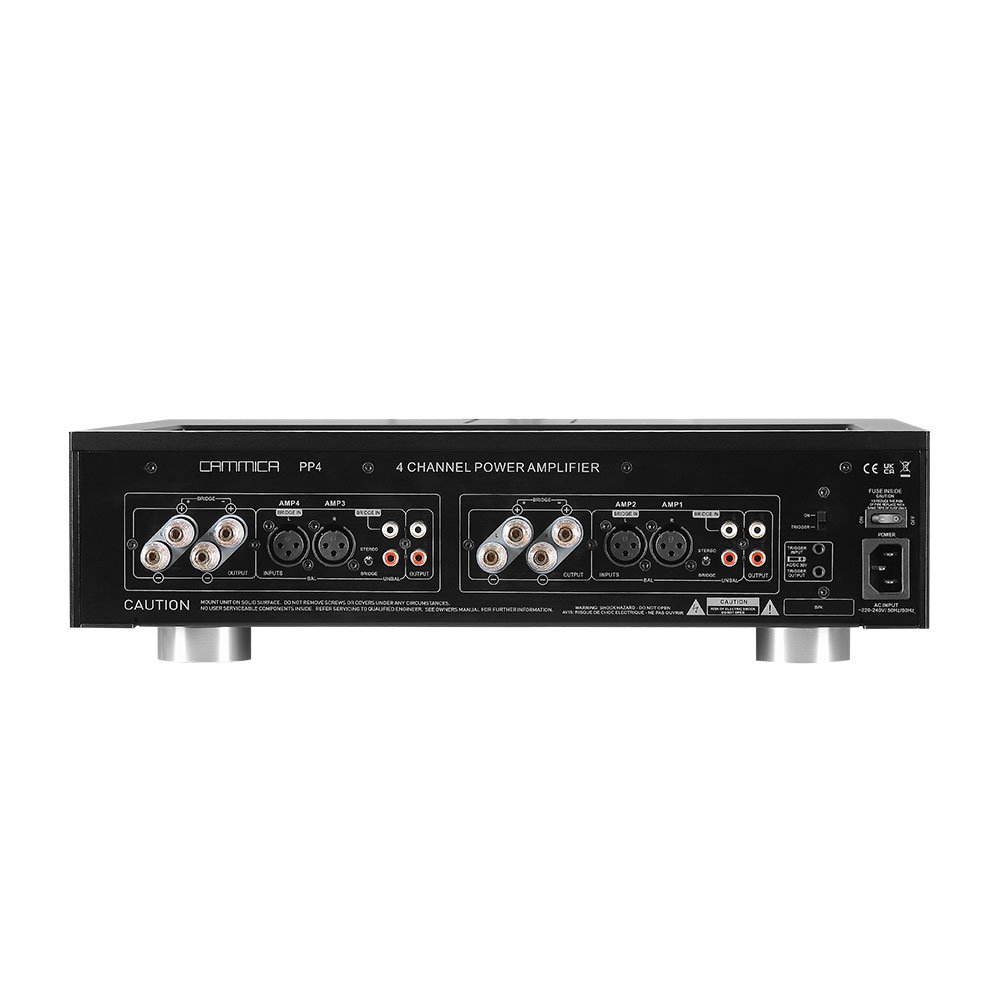
Figure 3 — A platform-model front panel: branding applied without new tooling, the standard route to a lower MOQ (typical construction).
Given the framework above, four questions reveal whether a supplier's MOQ was computed or improvised:
"Between line stop and first shippable unit, which stations run and how long does each take?" — Specific answers mean changeover cost is real and managed.
"What are the upstream minimums on the key materials for this model?" — Material-level numbers mean a transparent purchasing chain.
"What is tested on every unit, how long does burn-in run, is the data archived?" — Distinguishes a real test operation from a brochure claim.
"If I can only commit to a smaller volume, which fixed costs can we remove together?" — A factory offers options; an intermediary offers a counter-offer.
Question three doubles as identity verification: suppliers who cannot describe a test floor are usually not standing on one.
Misunderstanding | Reality |
|---|---|
"MOQ is a margin-protection trick" | It maps to five real fixed costs: changeover, materials, testing, certification, packaging |
"Small orders should cost about the same per unit" | Fixed costs spread over 100 vs 1,000 units differ by multiples |
"Lower MOQ is always better for me" | Low volume trades unit price for batch consistency and repeated ramp-up losses |
"The factory can take any order size it wants" | Upstream material minimums bind the factory too |
"MOQ and price break are the same topic" | One is set by fixed costs, the other by the volume-pricing curve |
"Pushing MOQ down squeezes the supplier's margin" | The healthy route removes fixed costs; margin squeezing gets recovered invisibly |
Q1: What MOQ levels are common in the amplifier industry? It tracks customization depth. Platform models with branding commonly land within a few hundred units; deeply customized models move visibly higher. Run the five fixed costs one by one — the number explains itself.
Q2: Can I order a few samples first and commit to volume later? The standard structure is paid sampling for validation, then a first-order-plus-repeats arrangement at the start of production.
Q3: Why does deeper customization raise MOQ? Because it re-erects fixed costs one by one: new circuits need fresh testing and certification, new appearance may need tooling, new materials need new purchasing. Platform models look cheap to enter precisely because those costs were amortized long ago.
Q4: My warehouse is small and my cash flow is tight — is there a middle path? Yes. Staged deliveries solve the storage problem, and first-order-plus-repeats solves the cash problem. Neither reduces total volume, so the factory's amortization logic stays intact.
Q5: Does this framework apply to speakers, CD players and other audio categories? It does. The five drivers are universal; only the weights shift — speakers lean harder on material minimums, amplifiers on test and burn-in capacity.
There is no mystique behind an amplifier MOQ — only the arithmetic of five fixed costs: changeover, material minimums, test capacity, certification spread and printed packaging. Understanding them lets you tell a computed number from an improvised one, and gives you six legitimate levers to lower it.
For anyone about to start that conversation, the useful starting point is evidence of the production floor behind the quote. You can verify ours on the factory capability and production line page; more sourcing and engineering explainers are in our technical article index, and the finished multichannel amplifiers these lines produce are on our product range overview.


